Urban Foxes
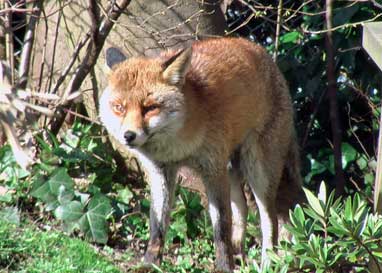
by Rob Stephenson from The Round Hill Reporter October 2016.
There is no difference between an urban fox and a country fox, other than where it lives, in fact they often move between town and countryside. The idea that urban foxes are bigger than rural foxes (because they eat leftover curries and KFCs from our bins) just isn't true. Most of them don't eat out of bins, they aren't any bigger that rural foxes and generally only come near houses because people feed them (or leave food out in plastic bags, which they consider an invitation to dinner). In fact foxes eat a lot of rats, which in my view is very useful behaviour considering the explosion of rats. They also eat earth worms, insects, fruit, voles and feral pigeons.
The last estimate (1980's) put the urban fox population at 33,000 nationwide. Consensus among experts is that there has been no significant increase, largely because populations are recovering from a mange epidemic. Fox populations are remarkably self- regulating and most only live for two years.
It is incredibly rare for a fox to kill a cat. A typical urban fox home range will cover an area occupied by upwards of 100 cats, so they will meet cats every night and invariably ignore each other. But they will kill/eat chickens, rabbits and guinea pigs, so these pets need to be securely protected if left out at night. Young foxes are very inquisitive and playful. Gardening gloves, shoes, balls and anything that smells nice that you leave in the garden are all favourite toys. Have you seen the poster of the lost Teddy Bear waiting to be reclaimed in the window of 103 Richmond Rd? He was left behind by foxes after playing in the back garden.
Never try to make a fox tame by hand feeding it, because the fox might then approach people who can be scared not knowing if the fox is being aggressive or inquisitive. But the occasional peanut butter and jam sandwich left out at twilight while you watch from a distance......what's the harm.
This page was last updated by Ted on 24-Apr-2026